
ADA Parking Lot Requirements in Georgia (2026 Guide)
ADA compliance is one of those things a business doesn't think about until a complaint letter lands or an inspector walks the lot. By then it's a scramble. A faded stripe, an access aisle an inch too narrow, or a missing sign can each turn into a fine or a lawsuit, and the fix always costs more under pressure.
Here's a plain guide to ADA parking lot requirements for Georgia businesses in 2026: how many accessible spaces you need, the exact dimensions, the signage and slope rules, and what non-compliance can actually cost.
How Many Accessible Spaces Does Your Lot Need?
The number of accessible spaces is set by the total number of spaces in your lot. The federal 2010 ADA Standards lay out the minimums:
- 1 to 25 total spaces: 1 accessible space
- 26 to 50: 2 accessible spaces
- 51 to 75: 3 accessible spaces
- 76 to 100: 4 accessible spaces
- 101 to 150: 5 accessible spaces
- 151 to 200: 6 accessible spaces
The count keeps scaling from there. On top of that, at least one in every six accessible spaces (rounded up) must be van-accessible. A small 30-space lot, for example, needs two accessible spaces, and one of them must be van-accessible.
Accessible Space Dimensions and Access Aisles
Size is where a lot of lots quietly fall out of compliance, often after a re-striping years ago narrowed an aisle without anyone noticing. The dimensions are specific for a reason.
Standard versus van-accessible
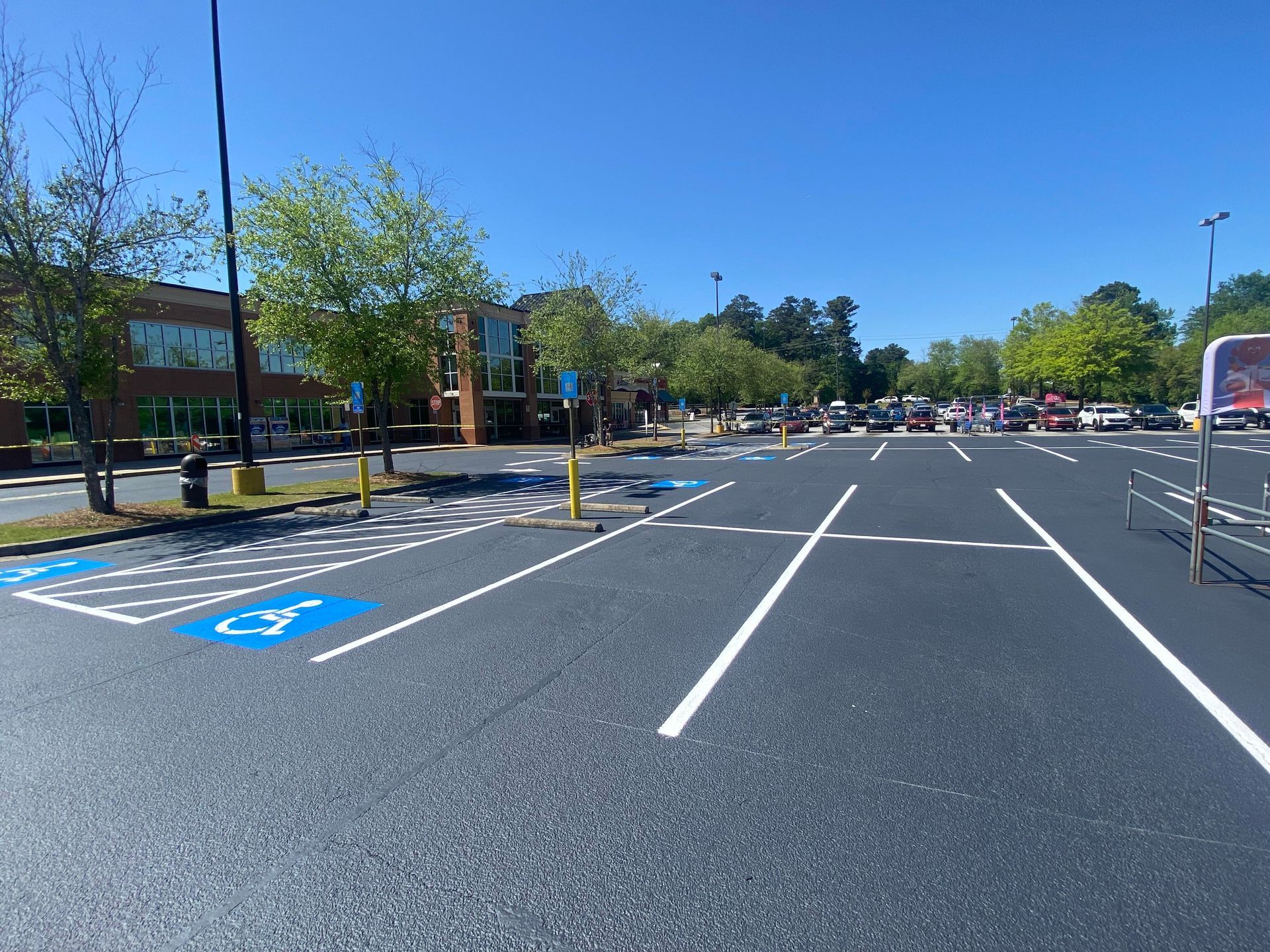
A standard accessible space must be at least 8 feet wide, with a 5-foot access aisle alongside it. A van-accessible space needs more room: either an 11-foot-wide space with a 5-foot aisle, or an 8-foot space paired with an 8-foot aisle. Van routes also need 98 inches of vertical clearance so a lift-equipped van can get in and out.
The access aisle isn't optional striping. It's the space someone needs to deploy a ramp or lift, and two accessible spaces can share one aisle between them.
Signage, Slope, and the Accessible Route
Spaces alone don't make a lot compliant. Three more details trip up businesses regularly.
The details that fail inspections
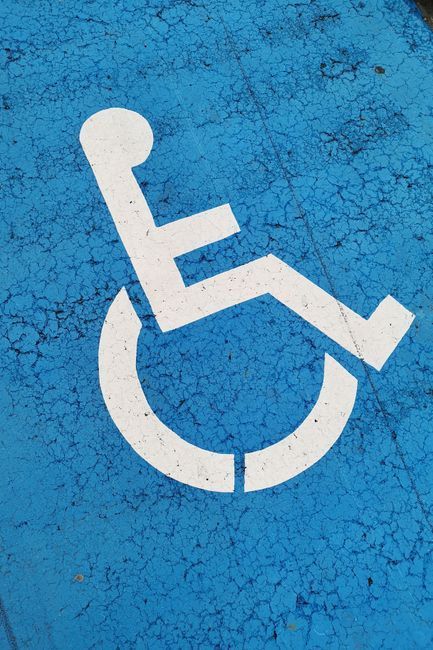
Signage: each accessible space needs the International Symbol of Accessibility on a sign mounted so the bottom sits at least 60 inches above the ground, high enough to stay visible when a vehicle is parked. Van spaces need an added "Van Accessible" sign.
Slope: accessible spaces and their aisles must be nearly level, with no more than a 1:48 slope (about 2%) in any direction. A lot that drains well can still fail here if the accessible spaces sit on too much of a grade.
Route: there must be an accessible path from the spaces to the building entrance, placed on the shortest route, free of steps and steep ramps.
What Non-Compliance Actually Costs
The risk is real and it comes from two directions. Federal penalties under the ADA can reach into the tens of thousands of dollars for a first violation, with larger amounts for repeat violations. These figures adjust over time, so the number is a moving target, but it's never small.
The more common hit is private lawsuits. Accessibility complaints, including the well-known wave of drive-by ADA suits, can leave a business covering its own legal costs plus the plaintiff's. Settling and retrofitting under a deadline almost always costs more than building it right.
Keeping a Lot Compliant Over Time
Compliance isn't a one-time box to check. Paint fades, sealcoating can cover old markings, and a careless restripe can undo it all. Build ADA checks into your regular upkeep so a routine maintenance visit doesn't accidentally create a violation, something we build into our year-round parking lot maintenance checklist.
The Paving Guys has spent years keeping Georgia commercial lots compliant and safe, which is why businesses call them when a complaint letter or a tight deadline puts the clock on. For a deeper walkthrough of the rules, our guide to ADA compliance for Georgia parking lots goes further into the specifics.
Drawing the Line on Compliance
Count your spaces, measure your aisles, check your signs and slope, and keep it all up as the paint fades. Most violations come from small details nobody re-checked, and most are cheap to fix before they become expensive. Not sure where your lot stands? Request a free ADA compliance assessment.
FAQs
What's the best way to make sure a parking lot stays ADA-compliant?
The best approach is a professional ADA review at install or restripe, then a quick check at every maintenance visit. Aisle widths, sign height, and slope are the usual failure points, and all three can drift over years of repainting and sealcoating. Catching them during routine upkeep keeps you ahead of complaints.
Do small businesses really have to meet ADA parking requirements?
In most cases, yes. ADA parking rules apply broadly to businesses open to the public, regardless of size, and a small lot still needs at least one accessible, van-accessible space. The exact obligations can vary with your situation, so confirm the specifics for your property before you assume an exemption applies.